Generative Engine Optimization (GEO): The 2026 Playbook for Getting Your Brand Cited by ChatGPT, Gemini and Perplexity
GEO is the practice of making AI answer engines cite your brand. Brands cited in AI Overviews earn roughly 35% more organic clicks. Here is the exact GEO checklist we run for clients — entities, structured data, citable statistics and llms.txt.

Quick answer: Generative Engine Optimization (GEO) is the practice of structuring your content, entities and data so AI answer engines — Google AI Overviews and AI Mode, ChatGPT, Gemini, Perplexity, Claude and Copilot — cite your brand when they generate answers. It matters because brands cited in AI Overviews earn roughly 35% more organic clicks and 91% more paid clicks than non-cited brands (Seer Interactive), and because a growing share of buying research now happens inside AI chat instead of on a results page.
Why GEO became urgent in 2026
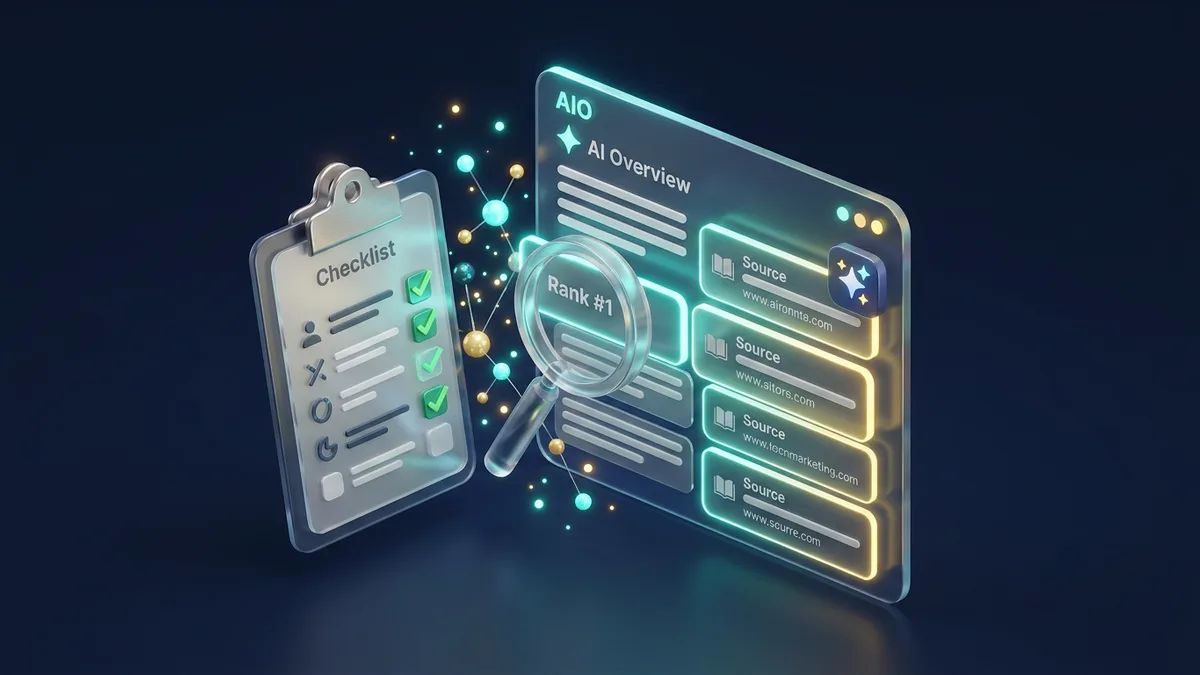
Three shifts converged this year. First, AI Overviews now appear on well over 20% of Google searches, and when they appear, the click-through rate for the top-ranking page drops by about 58% (Ahrefs, 2026). Second, Google made AI Mode a mainstream way to search at I/O 2026, adding agent capabilities directly into Search. Third, assistants like ChatGPT and Perplexity became genuine referral channels — small in volume, but with visitors who convert at dramatically higher rates because the AI already pre-qualified them.
The result: being the answer now matters more than being the first link.
How AI engines choose who to cite
From our client experiments and the published research, AI engines favor content that is:
- Directly quotable — a clear, self-contained answer in the first 1–2 sentences of a section.
- Statistically anchored — original numbers, benchmarks and cost tables get cited far more than opinions.
- Entity-consistent — your name, address, services and claims match everywhere (site, LinkedIn, directories, Google Business Profile).
- Structured — FAQPage, Organization, Service and Article schema help engines map what you do.
- Accessible to AI crawlers — GPTBot, ClaudeBot, PerplexityBot and Google-Extended not blocked in robots.txt.
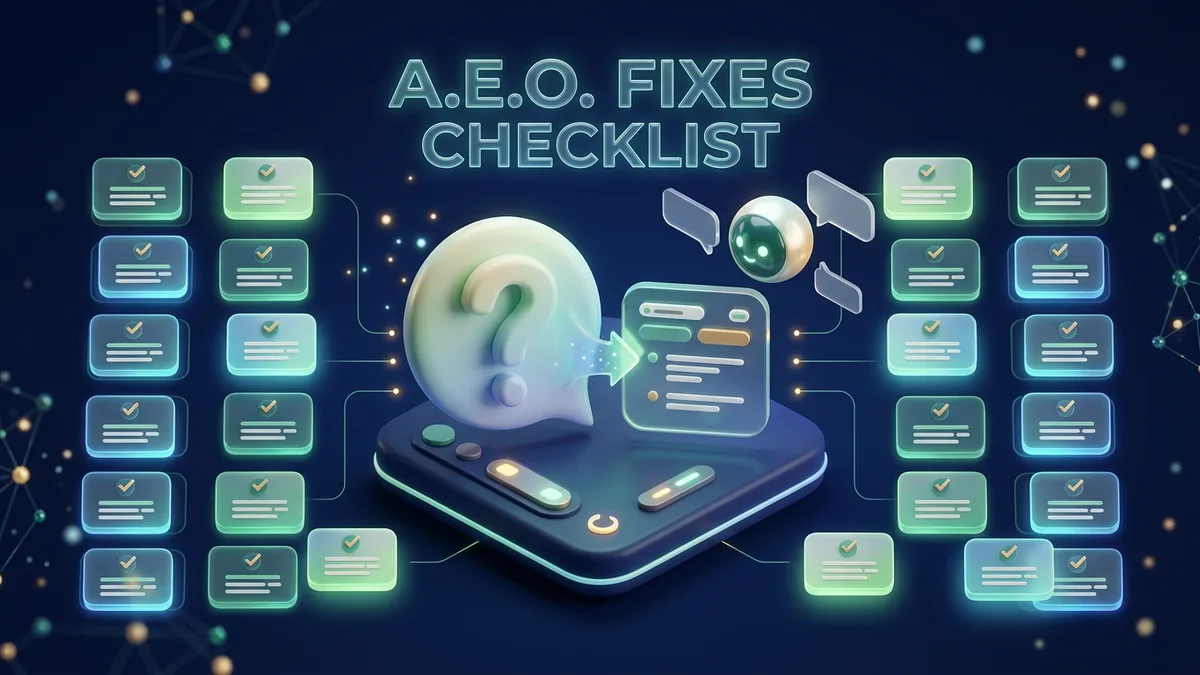
The 8-step GEO checklist we run for clients
- Crawler audit. Verify robots.txt allows the major AI crawlers and check server logs for their activity.
- Answer-first rewrites. Every key page opens with a 40–60 word direct answer to the query the page targets — the exact block an engine can lift.
- FAQ coverage. Add real questions (from sales calls, not keyword tools) with concise answers and FAQPage schema.
- Original statistics. Publish at least one number nobody else has — client benchmarks, cost breakdowns, before/after data. This is the single highest-leverage GEO asset.
- Entity cleanup. One canonical business name, one address format, consistent service descriptions across the web.
- llms.txt + llms-full.txt. Give AI agents a clean map of your most important content (see our llms.txt guide).
- Third-party presence. AI engines lean on directories, review sites and "best X" lists. Get listed where your category is discussed.
- Measure AI visibility. Track brand mentions in ChatGPT/Perplexity answers monthly, and segment AI-referral traffic in GA4 — it converts differently.
GEO vs SEO vs AEO — do you need all three?
Yes, and they are not competing disciplines. Classic SEO earns you the authority and crawlability AI engines depend on. AEO (Answer Engine Optimization) formats that authority into liftable answers. GEO extends it across the full set of generative engines and adds entity and citation strategy. In practice, roughly 70% of the work overlaps — which is why we deliver them as one engagement, not three invoices.
Frequently asked questions
How long does GEO take to show results?
There is no fixed timeframe — AI engines are probabilistic systems and no one can promise when (or whether) a specific citation appears. That said, engines re-crawl and re-synthesize continuously rather than waiting for ranking recalculations, so improvements to answer structure, schema and entity signals tend to be reflected faster than classic SEO changes. Track brand mentions monthly to see the trend.
Can you rank in AI answers without ranking in the top 10?
Yes. Ahrefs research across 863,000 SERPs found that only 38% of AI Overview citations now come from top-10 pages — meaning roughly 62% come from outside the classic top 10. Citability beats position — we cover this in depth in our AI citations article.
Is GEO worth it for small local businesses?
Especially for them. Local "best agency in Pune"-style queries are exactly what people now ask assistants, and most small competitors have done zero entity or answer optimization — the citation slots are wide open.

Yash founded Growth Hacking® in Pune in 2014 and leads the strategy behind the playbooks our teams run for 500+ clients across 25+ countries.