How to Get Cited in Google AI Overviews: The 2026 Checklist
Ahrefs found only 38% of AI Overview citations come from the top 10 — meaning answer-ready content gets cited even without ranking first. The exact 15-point checklist we run to win citations.
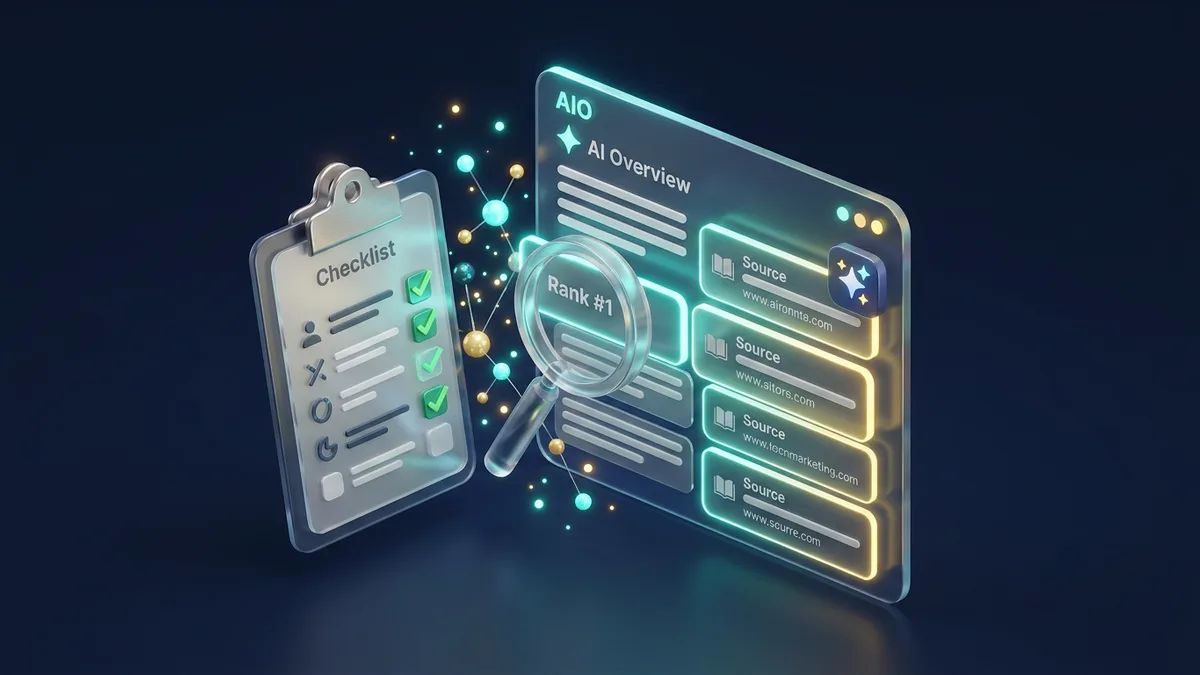
Quick answer: Google's AI Overviews cite pages that answer the query in the first two sentences, carry clean structured data, and demonstrate a verifiable entity behind the content — and ranking #1 is not a prerequisite. Ahrefs' study of 863,000 SERPs found only 38% of AI Overview citations come from that query's top-10 results: 62% of citations go to pages ranking lower or not at all. That is the opening. Here is the 15-point checklist we run to take it.
Why citations beat rankings in 2026
Two forces changed the math. First, zero-click: SparkToro's 2026 analysis of Similarweb data shows under a third of US Google searches now send a click to the open web. Second, being cited pays even without the click — Seer Interactive measured that brands cited inside AI Overviews earn roughly 35% more organic clicks and 91% more paid clicks than uncited brands on the same queries. Citation is the new position one.
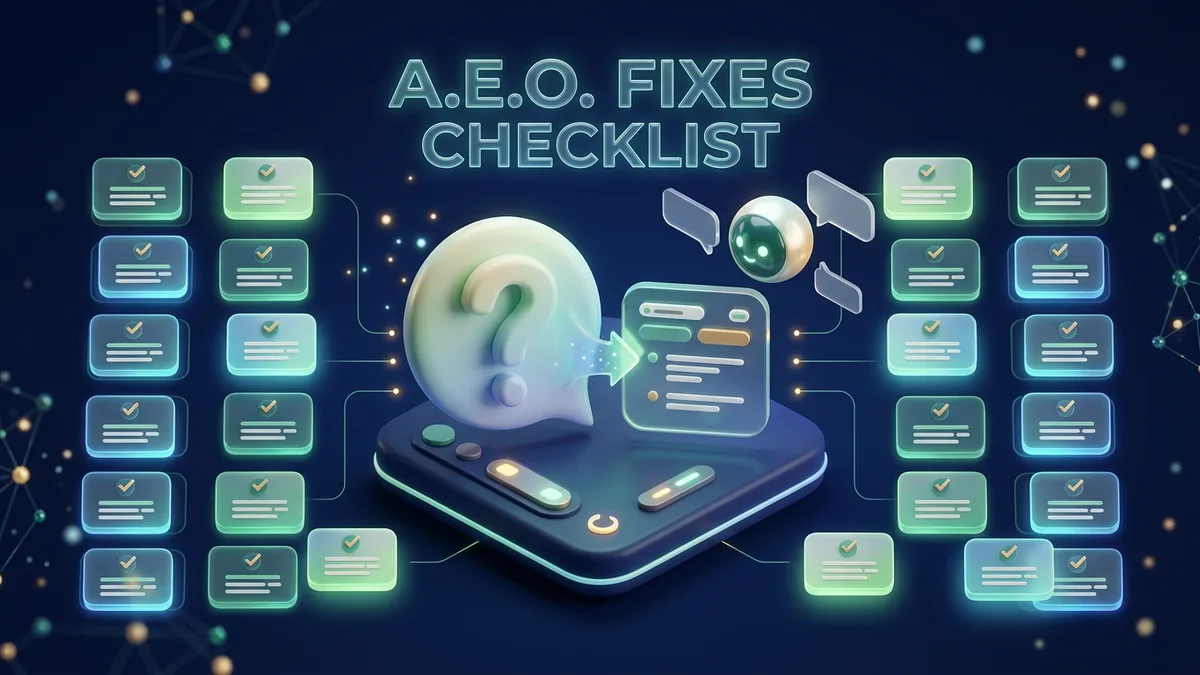
The 15-point citation checklist
Content structure (points 1–6)
- Answer-first paragraphs. Open every page with a 40–60 word direct answer to the query the page targets. AI Overviews lift passages, not pages.
- One question per H2. Phrase section headings as the questions people ask; answer immediately below.
- Extractable facts. Numbers, dates, names, prices — concrete claims are what get quoted. "₹15,000–₹50,000/month" gets cited; "affordable pricing" never will.
- FAQ blocks with 5–8 real questions per page, marked up with FAQPage schema.
- Tables for comparisons. AI systems parse and re-present tabular data disproportionately often.
- Update dates that are honest. Fresh, dated content wins recency-sensitive queries; fake freshness gets caught.
Technical signals (points 7–11)
- Schema on every template — Organization, Article with a named author, Service, FAQPage, BreadcrumbList.
- Named human author with an author page and Person schema. Anonymous content is losing citation share.
- Server-rendered HTML. AI crawlers largely do not execute JavaScript; if the answer is not in the source, you do not exist.
- Open your robots.txt to AI crawlers (GPTBot, ClaudeBot, PerplexityBot, Google-Extended) unless you sell the content itself.
- llms.txt at the root with your key facts and page map — cheap, forward-compatible insurance.
Entity signals (points 12–15)
- Consistent legal identity everywhere — same name, address and registration details across your site, Google Business Profile, LinkedIn and directories.
- Third-party corroboration. AI engines weight what others say about you; directory profiles, reviews and press mentions all feed the entity graph.
- Own one topic cluster deeply rather than ten shallowly — engines cite recognized topical authorities.
- Quotable one-liners. Write the sentence you want quoted, then build the section around it.
How to verify it's working
Google added generative-AI performance reports to Search Console in June 2026 — dedicated views of impressions inside AI features. Track those weekly alongside brand-mention checks in ChatGPT and Perplexity for your money queries. Our AI SEO & GEO service runs this entire checklist as a managed engagement, with the citation-tracking dashboard included.
Frequently asked questions
Do I need to rank on page 1 to get cited?
No — 62% of AI Overview citations in Ahrefs' 863K-SERP study came from outside that query's top 10. Answer-ready structure can win citations that rankings alone cannot.
How long does it take to see citations?
There is no guaranteed timeframe — AI Overviews re-synthesize continuously, so structural fixes on already-indexed pages tend to be picked up faster than classic ranking changes, but no specific citation or timeline can be promised. New pages need indexation plus authority first.
Does getting cited actually drive business?
Seer Interactive's data says cited brands get ~35% more organic clicks; beyond clicks, assistants repeat cited brands by name in answers — brand demand you can measure in direct and branded-search traffic.

Yash founded Growth Hacking® in Pune in 2014 and leads the strategy behind the playbooks our teams run for 500+ clients across 25+ countries.